Brewhouse Calculations that Make a Difference
Brewhouse efficiency numbers range from the low 70s into the 90s between breweries with similar brewhouses and recipes. Dialing in pH, temperature, volume, and grind variation can significantly impact these numbers.
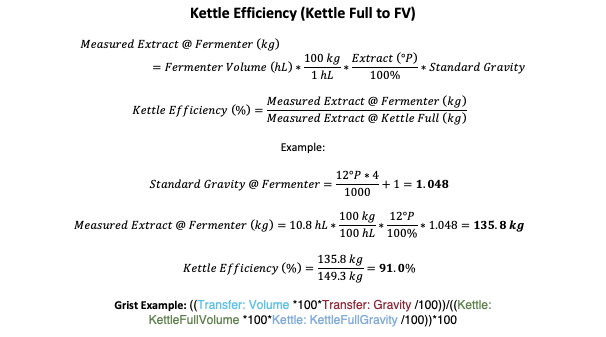
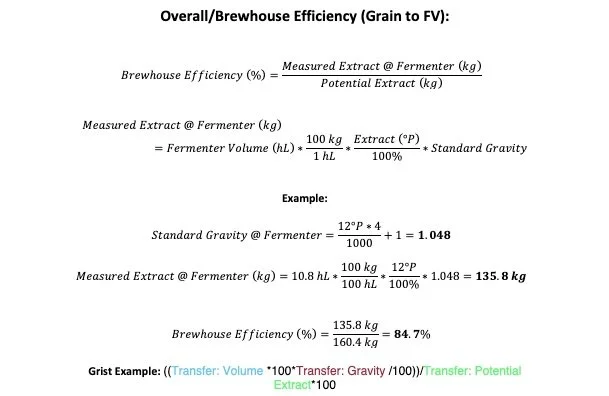
Below we’ll walk through critical brewhouse calculations for monitoring efficiencies at each stage and achieving consistency.
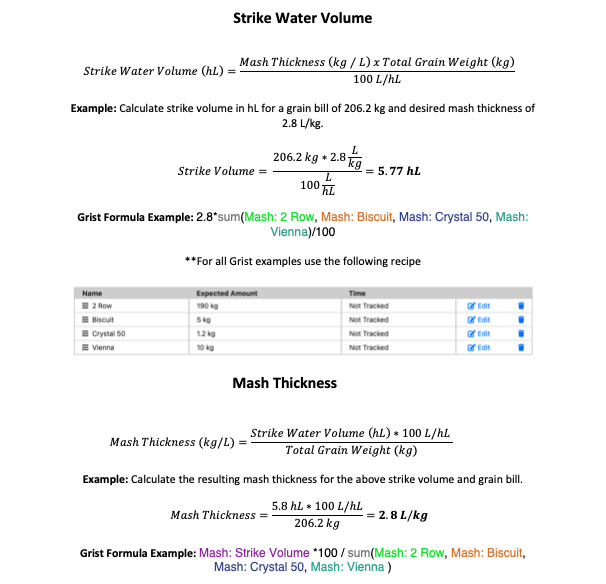
Mash Thickness & Strike Water Volume
Strike water volume determines mash thickness, which affects fermentability. Thicker mashes protect beta amylase and proteolytic enzymes, which can increase fermentability and FAN. Conversely, thinner mashes increase the surface area for extraction but do not protect those enzymes, leading to higher extract and lower fermentability. Mash thickness typically ranges from 2-4 and is a critical control point for efficiency, yield, and flavor.
Strike Water Temperature
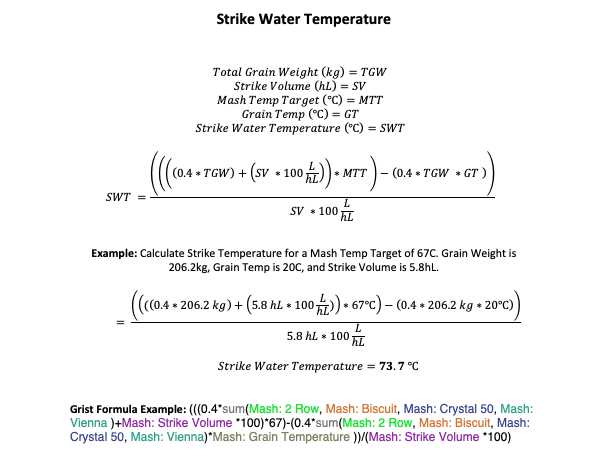
Mash enzymes function optimally in specific temperature ranges. For this reason, mash temperature has a significant impact on fermentability. If using a mash tun without heating capability (as in most infusion mashes), strike temperature is the only tool for hitting mash temperature. The equation below details how to calculate strike temperature accurately. The calculation does not consider heat loss from the mash tun, so keep that in mind if you’re not pre-heating.
Kettle Full Volume
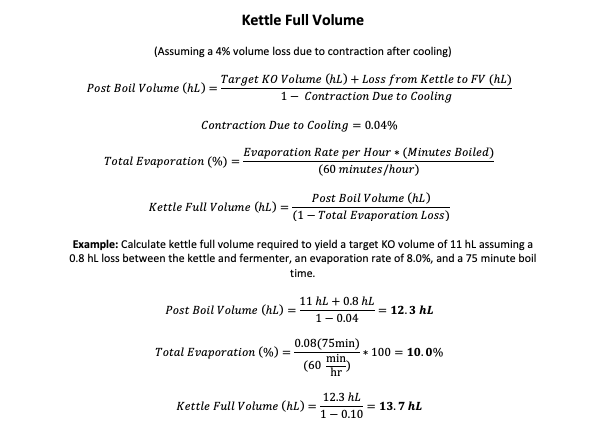
Volume will be lost through evaporation during boiling and kettle full volume should account for this. Evaporation can vary from 5-15%, so it’s best to use an actual value from the brewery. For the sake of this example an average of 8% will be used.
Sparge Water Volume
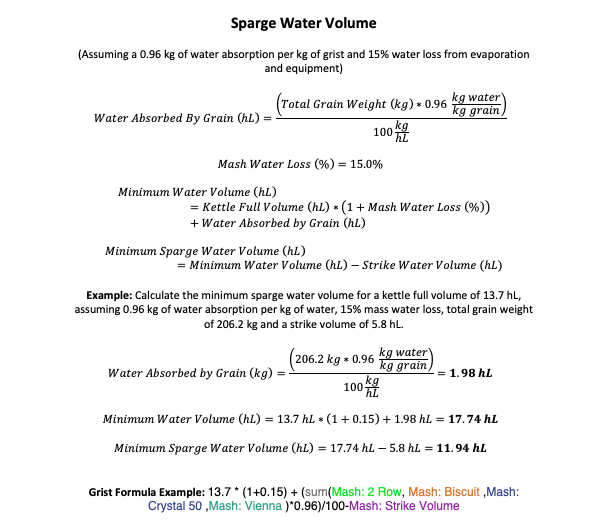
Now that kettle full and strike water volumes are calculated, sparge water volume can be back-calculated. Consistency in sparge water volume will lead to consistency in pH, OG, yield, color, and flavor.
Hop Additions
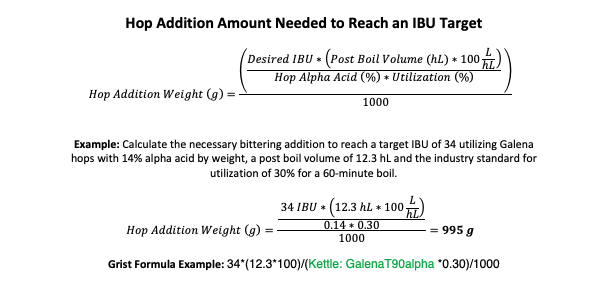
Alpha acid changes with incoming hop lots. Due to this variation, the bittering hop addition should change based on alpha % to achieve consistency in IBU.
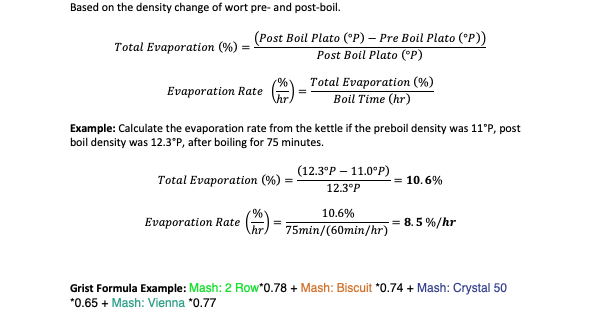
Kettle Evaporation
Many breweries do not have accurate volumetric readings for pre and post-boil volume. For this reason, we calculate kettle evaporation based on pre and post-boil gravity.
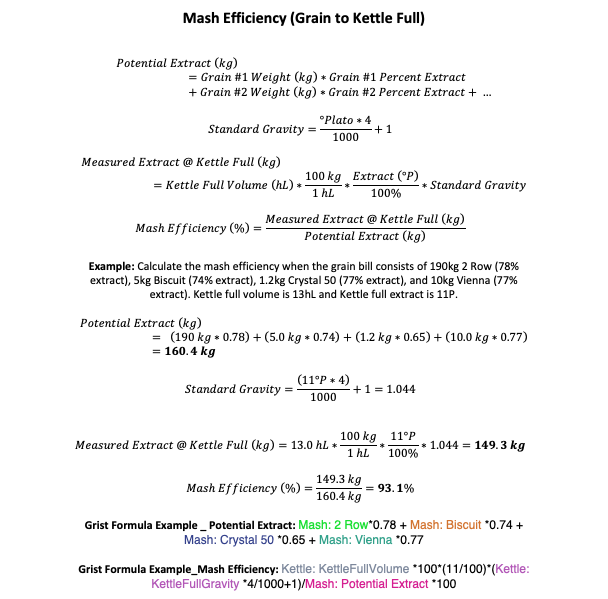
Potential Extract & Mash Efficiency
Calculating potential extract and mash efficiency can be confusing, but it’s critical for running an efficient and modern brewhouse. Using the coarse grind as is % from your malt COA for these calculations is preferable.